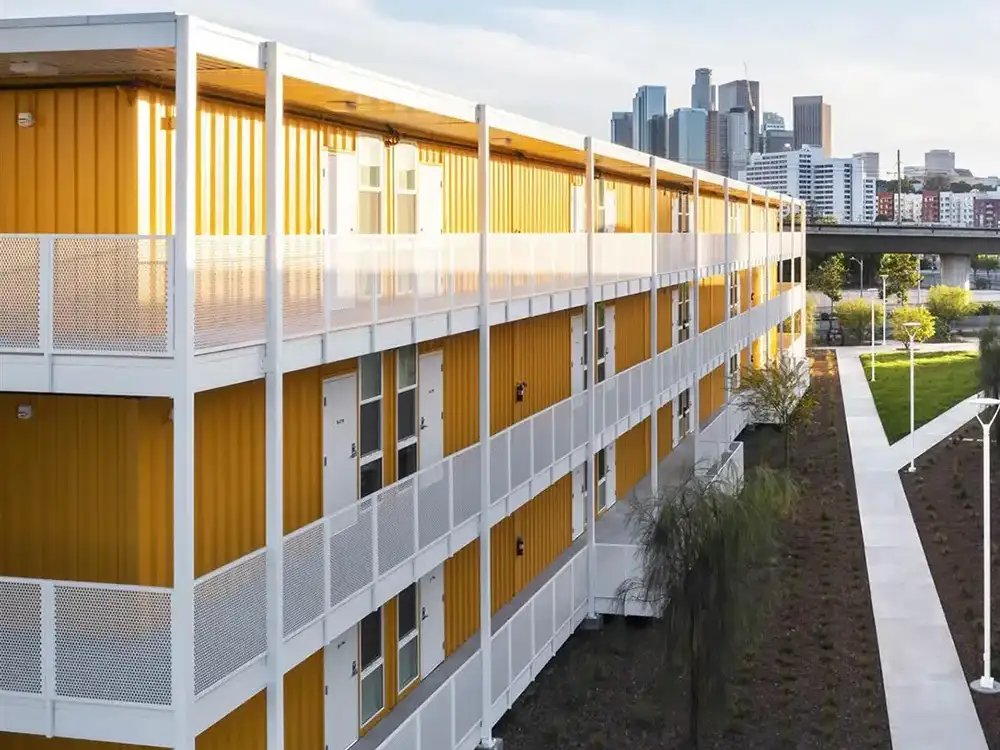
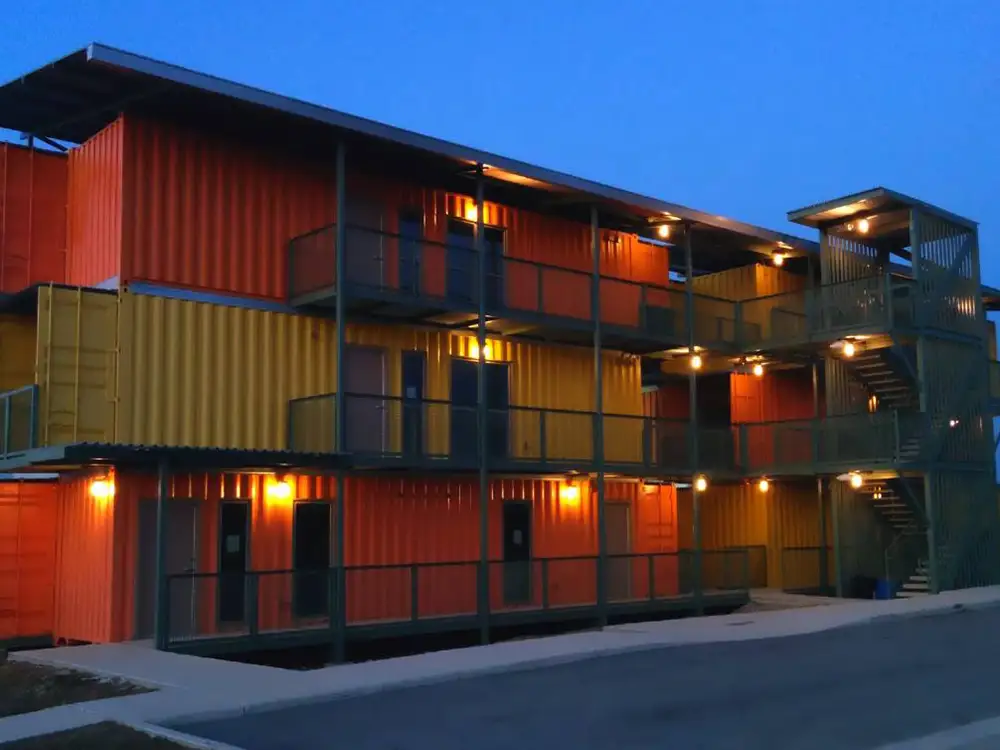
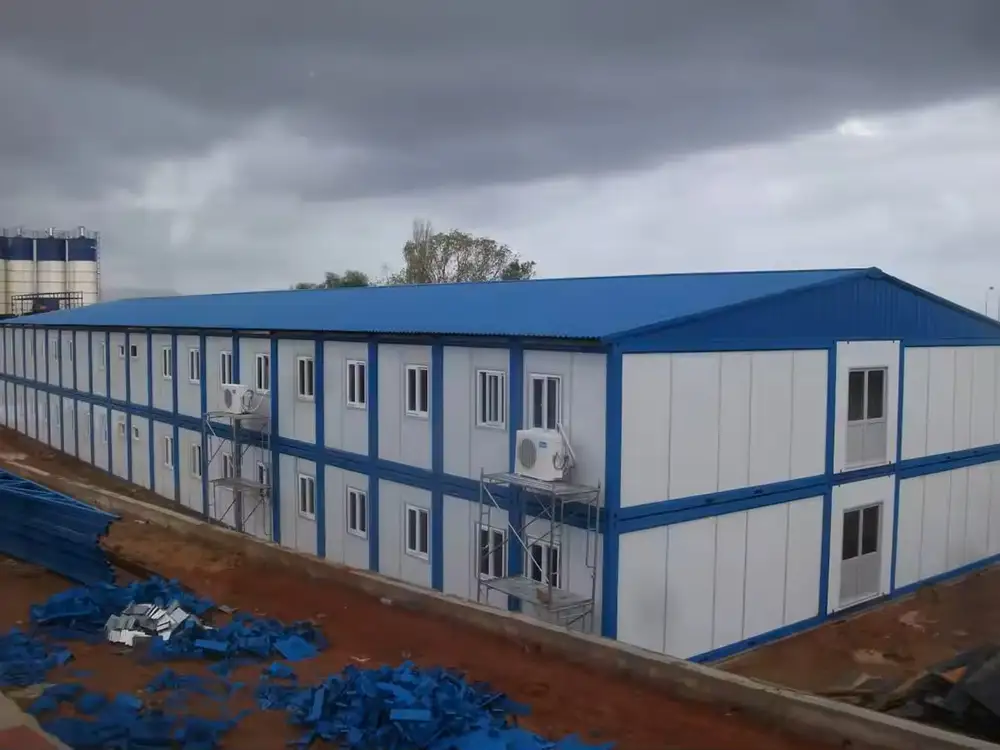
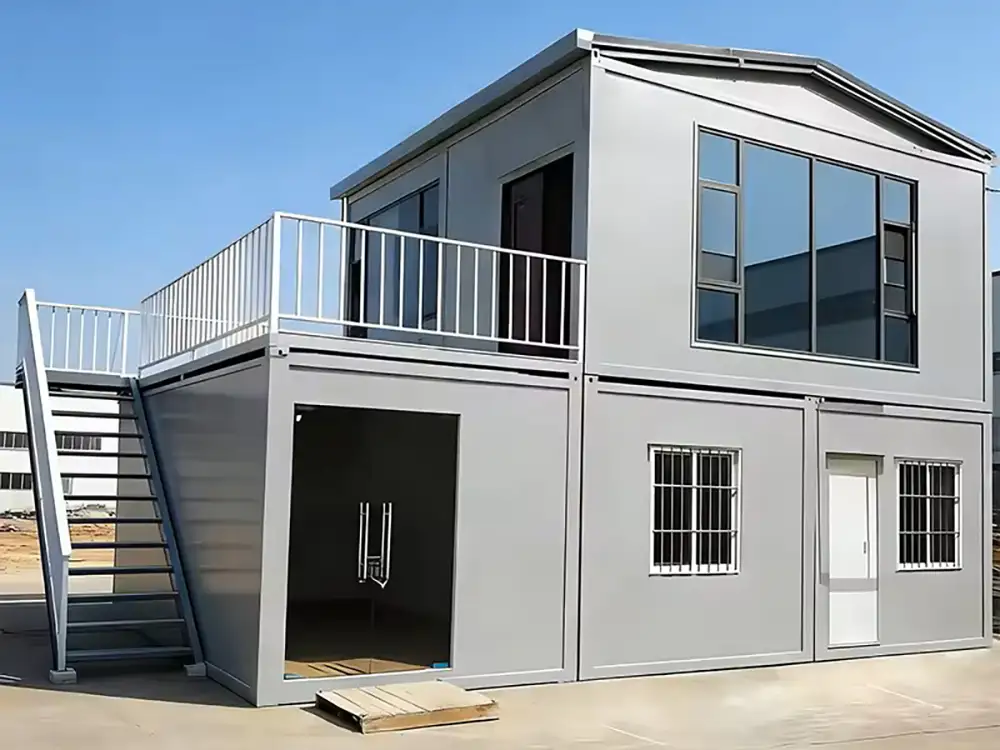
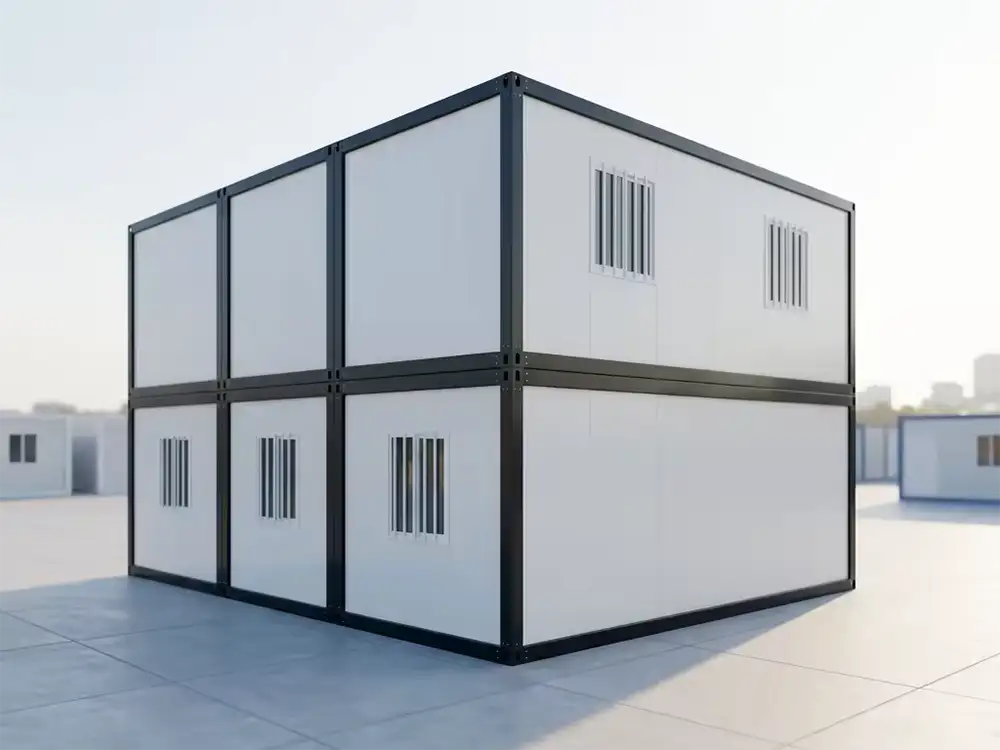
1. Transportation loading: Each 40HQ container could load 18 sets of container house. 2. Installation efficiency: Each container house could be installed by two people within one day. 3. Price & quality: Low price, reliable quality, high cost performance. 4. Specification & size: The size could be customized according to specific requirements. 5. Roof drainage: It is equipped with free drainage and external drainage systems to prevent water accumulation.
|
Size |
10FT/20FT/40FT Customized |
|
Parameterindicators |
Fire resistance: Class A |
Wind resistance performance: 0.50kN/m2 |
|
Life: Over 35 years |
Seismic performance: Level 8 |
|
Main Frame |
Galvanized formed beam,Electrostatic spray paint treatment, traffic white, thickness ≥ 80 y m |
|
Bare steel Actual Thickness:2.5mm/2.25mm/1.95mm/1.75mm(±0.01) |
|
Top frame |
Long beam: Galvanized beam, width 160mm |
|
|
Short beam: Galvanized beam, width 160mm |
|
Bottom frame |
Long beam: Galvanized beam, width 160mm |
|
|
Short beam: Galvanized beam,width 160mm |
|
Steel column |
Column: Galvanized column, width 160mm x160mm |
|
|
Bolt: High strength carriage bolt |
|
Turning accessories |
160mm*160mm,ActualThickness: 3.5mm/3.0mm(±0.01) |
|
Square tube |
Chassis purlin |
50 *100 galvanized square tube, Actual Thickness:1.2mm/1.1mm/1.0mm(±0.01) |
|
20 * 40 galvanized square tube, Actual Thickness1.0mm/0.7mm(±0.01) |
|
Top purin |
50 * 50 galvanized square tube, Actual Thickness:1.4mm/1.2mm(±0.01) |
|
40 * 60 galvanized square tube, Actual Thickness1.0mm/0.8mm(±0.01) |
|
40 *40 galvanized square tube, Actual Thicknesse1.0mm/0.8mm(±0.01) |
|
Door frame pillar |
20 * 40 galvanized square tube, Actual Thickness:1.0mm/0.7mm(±0.01) |
|
Pressure plate groove |
Irregular parts,Actual Thickness:1.0mm/0.7mm(±0.01) |
|
Wallboard |
50mm/75mm/100mm foam board, rock wool, silicon rock board0.25mm/0.30mm/0.4mm steel plate |
|
Door |
Steel door, Wg30mm xH2035mm, 0.3mm/0.25mm steel plate(±0.01) |
|
Window |
Sliding window, W925mm xH1200mm, single glass |
|
Floor |
18mm fireproof fiberglass board |
|
Roof tiles |
Thickness ≥0.40mm |
|
Ceiling tiles |
Thickness ≥0.20mm |
|
Thermal insulation cotton |
5Omm glass fiber insulation cotton |
|
Auxiliary materials |
The standard includes all screws, structural adhesives, etc |
|
Circuit |
Adapt power supply according to different countries and regions |
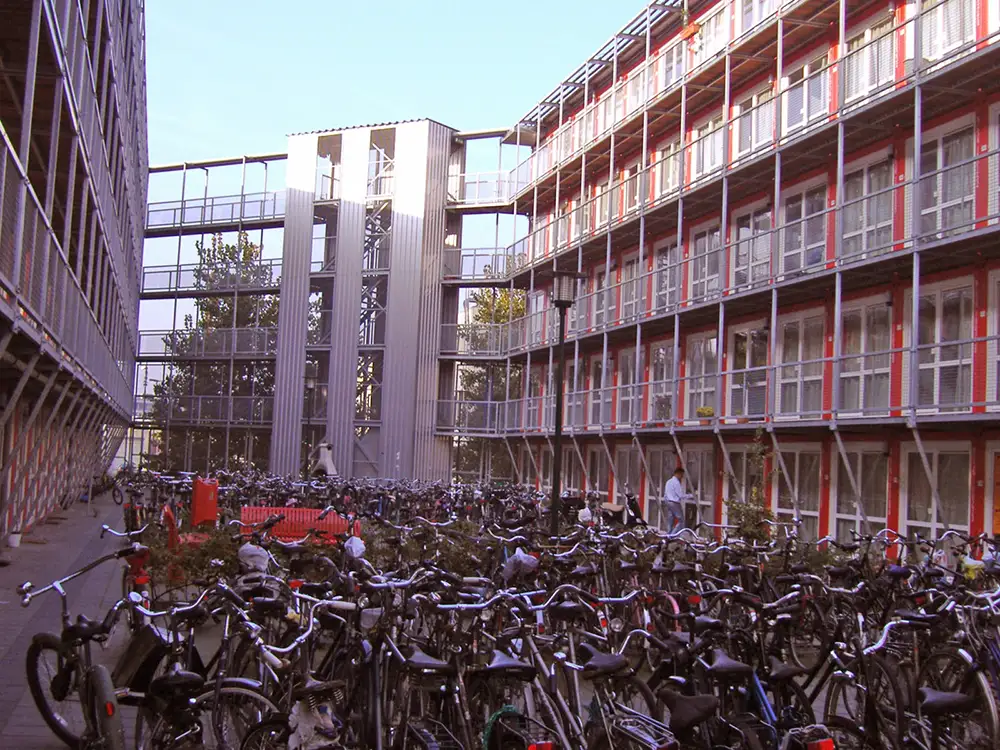
Container Student Housing is rapidly emerging as a modern and efficient solution to meet the growing demand for student accommodation worldwide. With increasing student enrollment, limited campus space, and rising construction costs, traditional building methods often struggle to deliver timely and affordable housing. Modular container-based housing addresses these challenges by offering fast construction, flexible design, durability, and cost efficiency, making it an ideal choice for universities, developers, and private student housing providers.
One of the most significant advantages of container student housing is its rapid construction timeline. Traditional student apartment projects can take months or even years to complete, leading to delays and increased costs. In contrast, container housing units are prefabricated in controlled factory environments and delivered ready for assembly. On-site installation is quick and efficient, often allowing entire housing complexes to be completed in a fraction of the time required for conventional construction. This enables institutions to respond quickly to housing shortages and growing student populations.
Durability is a key feature of container-based housing. Constructed from high-strength steel, container student housing units are built to withstand heavy use and various environmental conditions. Weather-resistant coatings protect against corrosion, moisture, and UV exposure, ensuring long-term reliability. Whether located in urban campuses or remote educational sites, these units provide a stable and secure living environment for students.
Flexibility in design is one of the defining strengths of container student housing. Units can be configured into a variety of layouts, including single rooms, shared apartments, studio units, or multi-bedroom configurations. By stacking and combining modules, developers can create multi-story student housing complexes that maximize land use. This modular approach allows for easy expansion and reconfiguration, making it possible to adapt to changing student numbers and institutional needs.
Customization is essential for creating attractive and functional student living spaces. Container Student Housing can be tailored with a wide range of interior finishes, flooring options, insulation levels, and furniture packages. Facilities such as private bathrooms, shared kitchens, study areas, and communal lounges can be integrated into the design. Modern amenities, including air conditioning, heating systems, and high-speed internet infrastructure, ensure a comfortable and connected living experience.
Student comfort and well-being are central to the design philosophy. Proper insulation and ventilation systems maintain a comfortable indoor climate, while large windows provide natural light and enhance the overall living environment. Soundproofing features can also be incorporated to minimize noise and create a quiet space for studying. Ergonomic furniture and smart storage solutions help maximize functionality within compact living spaces.
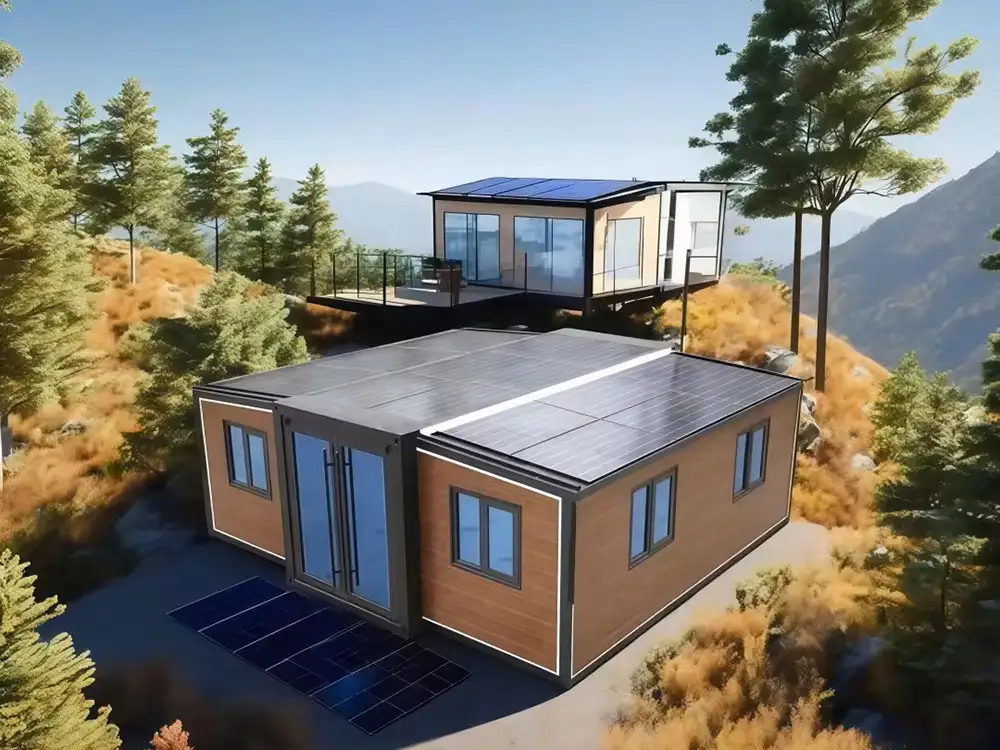
Sustainability is a major advantage of container student housing. By repurposing shipping containers and using prefabrication techniques, these housing solutions significantly reduce construction waste and material consumption. Energy-efficient insulation, LED lighting, and optional renewable energy systems such as solar panels contribute to lower energy usage and reduced environmental impact. These features align with the sustainability goals of many educational institutions and urban development projects.
Portability and flexibility make container housing a long-term investment. Units can be transported and relocated as needed, making them suitable for temporary campuses, expansion projects, or changing enrollment patterns. This adaptability ensures that institutions can optimize their resources and respond to future needs without significant additional investment.
Safety and compliance are critical in student housing. Container Student Housing units are designed to meet relevant building codes and safety standards, including fire resistance, structural integrity, and electrical safety. Secure access systems, emergency exits, and fire protection features ensure a safe and secure environment for students.
Applications for container student housing are extensive. They are widely used in university campuses, private student housing developments, vocational training centers, boarding schools, and temporary educational facilities. Their scalability and adaptability make them suitable for both urban and remote locations, providing flexible housing solutions for diverse educational needs.
Maintenance is simple and cost-effective due to the durable materials and modular design. Surfaces are easy to clean, and components can be accessed for quick repairs or upgrades. High-quality finishes and protective coatings ensure long-term performance with minimal maintenance requirements.
Cost efficiency is one of the most compelling benefits. Container student housing reduces construction time, labor costs, and material waste, resulting in significant savings compared to traditional building methods. The modular approach also allows for better budget control and predictable project timelines. Additionally, the ability to expand or relocate units adds long-term financial flexibility.
Modern aesthetics play an important role in attracting students. Container student housing can be designed with contemporary architectural styles, including sleek exteriors, vibrant colors, and creative layouts. Custom façade treatments and branding options allow developers to create visually appealing housing that enhances campus identity.
Community and social interaction are key aspects of student life. Container housing complexes can include shared spaces such as study rooms, lounges, dining areas, and recreational facilities. These communal areas encourage interaction, collaboration, and a sense of community among students, enhancing their overall experience.
In conclusion, Container Student Housing offers a smart, sustainable, and scalable solution for modern student accommodation needs. With rapid construction, durable materials, flexible designs, and a focus on comfort and community, these modular units provide a high-quality alternative to traditional housing. Whether for permanent developments or temporary expansions, container student housing delivers efficiency, adaptability, and long-term value for educational institutions and developers.
Prev:Sorry, no information
Next:
Donga Accommodation
TAG:
Related Category:
Container Student Housing China, suppliers, manufacturers, factory, customized, wholesale, quotation, made in China